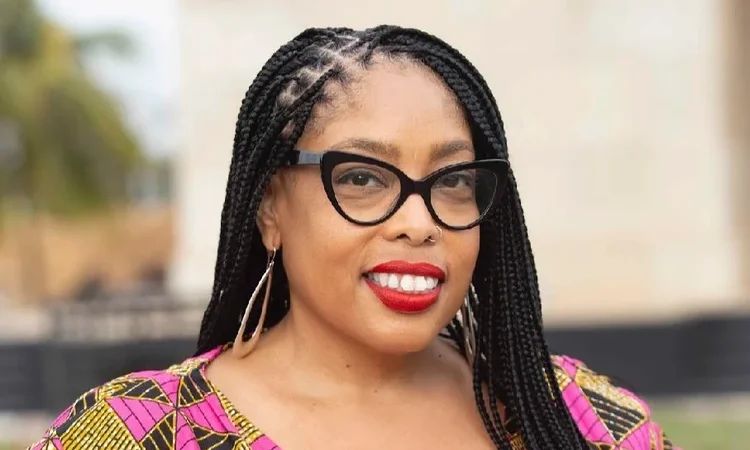
Dr. Sherri Williams’s Black Social Television reveals how Black audiences turned social media into a cultural remote control, demanding real accountability and reshaping Hollywood on their terms.
Black folks gathering to watch television is a cultural ritual that spans generations, from the living room commentary over Sunday dinners to the early days of live-tweeting that transformed television into a cross-continental group chat. For years, a recent iteration of this phenomenon lived under the moniker of Black Twitter: a sharp-witted and deeply protective collective that treated media representation as a battleground for agency.
As social media undergoes an unpredictable fracture, Dr. Sherri Williams, a professor at American University, is archiving this power. Her timely book, Black Social Television: How Black Twitter Changed Television, has just made its debut in paperback, landing as the industry wrestles with an unprecedented identity crisis.
Between a busy schedule of summer book festivals and academic conferences—stretching from the Columbus Book Festival to the streets of Harlem—Dr. Williams sat down with MadameNoire to unpack the legacy of collective digital power and why, even in a scattered internet era, the culture still holds the remote control.
RELATED CONTENT: ‘A Lotta Mess!’ Keke Palmer’s ‘Southern Fried Rice’ Ignites Conversation And Controversy: ‘This Thing Is So Weird’
Before a show ever reaches production, the gatekeeping machine of Hollywood decides whose stories are worthy and whose histories can be commodified. As Dr. Williams points out, the digital era granted everyday audiences the ability to disrupt the assembly line entirely. One of the most glaring examples of this collective work came in 2017, when HBO announced Confederate—a highly controversial concept developed by the creators of Game of Thrones.
“One of the things that I think is really interesting is the whole situation with a show called Confederate, which was being developed by the team that did Game of Thrones on HBO. The premise of the show was basically that it was going to show slavery operating in the 21st century as a corporation or enterprise. You might remember April Reign, who started #OscarSoWhite. April Reign and four other Black women said—now this was in 2017 when they first announced this—they were thinking, ‘We really don’t need a show that reimagines white supremacy reigning supreme in the United States because we’re actually living that now.’”
The cultural backdrop of that moment was already anxiety-inducing with real-world trauma, making the fictionalized enterprise of modern bondage feel like a cruel thought experiment.
“Because this was the same year where we saw white supremacists march on the campus of the University of Virginia with those tiki torches saying, ‘You will not replace us, Jews will not replace us’—that whole white replacement theory—having those flames reminiscent of the Ku Klux Klan night rides of the early 1900s. And this was also two years after Dylann Roof went into a church in South Carolina and killed Black elders while they were worshiping during Bible study.”
Rather than waiting for the premiere to register their disgust, digital activists strategically hijacked the existing cultural machinery. They utilized the massive Sunday night Game of Thrones trending topics to center a different conversation entirely.
“Roxane Gay called this show basically ‘slavery fanfiction.’ At the same time when Game of Thrones would air on Sunday nights, folks would use the hashtag because Game of Thrones would trend every time—even the names of the characters and things they said would trend. What they did was they got into that Twitter stream using the hashtag #GameOfThrones and also the hashtag #NoConfederate to talk about why they didn’t feel like we needed a show like this. One of the things they said is, ‘Listen, this show Game of Thrones, run by two white men, does not do a good job depicting gender on screen. So how can we trust them to do any kind of decent job depicting race, particularly in this era?’”
The campaign shook the network’s confidence. While Hollywood rarely confesses to bending a knee to the timeline, the swift cancellation of the project spoke volumes.
“#GameofThrones would trend pretty much every Sunday when Game of Thrones came on, and #NoConfederate started to trend, too. Eventually, the show got scrapped. HBO never actually said that the digital activism that these Black women spearheaded was the reason that they did not greenlight the show or take the show to production. But I can’t think of any other reason why they didn’t. The whole idea of the show, particularly during the specific racial and political moment that we were living through at the time, fused together to have digital activism stop this narrative from coming to screen.”
The struggle for healthy representation becomes infinitely more complicated when the subject shifts from scripted historical epics to the messy, high-voltage world of unscripted reality television. Shows like the Real Housewives and Love & Hip Hop franchises have long drawn fire for reinforcing archaic, hyper-aggressive stereotypes of Black women. Yet, the relationship between Black viewers and these shows is rarely one-dimensional. It exists in a complex space of duality.
“What I found when I took a look at the tweets—now, this was a while ago, at the time when people were really watching reality TV a lot and tweeting about it—when I was watching these shows, Basketball Wives LA and also Mary Mary, what I found are two really interesting things. One is that viewers really didn’t like a lot of the fighting, the clashes, the arguments, and a lot of the antisocial behavior that Black women engaged in on television. But at the same time, there were some people who said that they did appreciate Black women standing up for themselves and not needing a man or someone else to come and rescue them—that they would defend themselves.”
For Dr. Williams, dismissing the entire genre means missing the deeply human stories that manage to slip through the cracks of the editing bay. This includes narratives around systemic incarceration and marginalized identities that scripted television often neglects.
“I thought that was really interesting because to me it shows that yes, reality TV as a genre does have some problematic aspects to it, but it’s not all black and white. There are definitely shades of gray. When I think about reality TV, there are some storylines and narratives that we see on reality TV that we don’t necessarily see on scripted television. I think about particularly Black queer representations. There have been some Black queer cast members throughout the Love & Hip Hop franchise, and I think those are significant because hip-hop itself has not really embraced openly queer artists in the way in which we see them represented on reality TV. The balance between the two is totally different, and I think some of these representations are important.”
She recalls profound moments of emotional honesty centered around the fractured home dynamics created by the prison industrial complex, a raw reality that struck a deep chord with the digital community.
“As a community, we experience, unfortunately, a disproportionate amount of incarceration, especially incarceration that has an impact on families. Thinking of Love & Hip Hop, I think of Scrappy on Atlanta and Scrapp DeLeon on Atlanta. These were two men who unfortunately had to do some time for various crimes, and two of the most heartbreaking scenes that I remember from the entire franchise were when both of them had to tell their children that daddy was going to go away for a while and won’t be able to see them. Especially Scrapp DeLeon’s son, because his son looks just like him—the little boy is adorable, probably like four years old, and he was crying. The impact that incarceration has on the entire family when Black families experience this is not something that I see on scripted TV a lot, let alone reality TV. That’s why, in one sense, I’m just not ready to throw reality TV away as a whole, because there are some redeeming stories that we don’t see anywhere else.”
The genre has also occasionally acted as an unexpected educational platform for intersectional struggles within communities of color, offering visibility to traumas that rarely receive a spotlight.
“Another example—this is not necessarily a Black person, but it’s still significant to me—is Jonathan Hernandez, a makeup artist who worked with K. Michelle a lot on Love & Hip Hop: New York. He talked about being an openly gay man who was forced to go to conversion therapy as a child because he was a very effeminate young kid, and his mother was really concerned about him being teased and his prospects in life. He talked about how emotionally and physically taxing going through conversion therapy was for him. As a person of color experiencing conversion therapy, that’s not a narrative that I’ve seen anywhere else. It’s important for us to think about those narratives that we see, the kind of impact that they make, and the conversations that are had online simultaneously while the show is airing and even after it airs.”
Ultimately, the anxiety surrounding reality TV stems from its overwhelming visibility. When bad behavior goes viral, it often risks crystallizing into a definitive caricature in the broader public imagination.
“That conversation was pretty important among the audience, especially the ones about incarceration. Coming back to depictions of Black women, I think Black women see a couple of things. They don’t like the antisocial behavior, but then they do appreciate that Black women are standing up for themselves and not needing a man to come fight their battles and rescue them. But also, I think there is some recognition that representations of Black women engaging in antisocial behavior on reality TV shouldn’t be the default representation of Black women on television. That is where a lot of people have the biggest issue about these shows: because they’re so popular on television, they have virality and go viral on social media. Even if you don’t watch them, you know what’s on these shows, and some of the worst moments of these women’s lives are amplified on social media. Some people believe those moments coincide with common stereotypes of Black women.”
With the ongoing decentralization of X (formerly Twitter), many have wondered if the unique cultural collective of Black Twitter could ever be replicated, or if the digital diaspora is destined to remain fragmented. Dr. Williams views the shift not as a loss of power, but as a migration toward safer, more intentional sanctuaries. While Meta’s Threads offers a familiar structural warmth, platforms like Spill—founded by former Twitter executive Alfonso Terrell—are deliberately architected to protect Black cultural expression from the ambient hostility of the mainstream web.
“Threads has a lot of the same closeness, community, and sharing. One of the things that I really appreciated about Black Twitter is that it felt like having a conversation with or watching a conversation with cousins, and Threads feels very similar to that. I also think about Spill, an app that came out around 2024. When Elon Musk took over Twitter, he fired a lot of people, including Alfonso Terrell, who is the Black man who started Spill. On Spill, I see a lot of the same community and conversations that were on Black Twitter, and I really appreciate Spill because it is a place where you really don’t come into contact with a lot of the racist and political noise that crowds other social networks.”
To illustrate the peace of mind found within these new digital borders, Dr. Williams notes how Spill completely isolated its user base from the suffocating, highly polarized news cycles that dominated more conventional platforms during major public events.
“One really good example that I can think of is Charlie Kirk’s death. When Charlie Kirk died, I saw conversations, content, everything about Charlie Kirk on Facebook, Twitter, and Threads. The amount of social media content about him was overwhelming. Even if you wanted to get away from content about Charlie Kirk, you couldn’t on those social networks. But on Spill, I can’t say that I remember seeing a single post about him. I will be honest in saying that I really appreciated that, because in this era where there is so much racism, misogynoir, and outright bigotry that is being mainstreamed and accepted, Spill is a place where we have a refuge. We’re not going to be inundated with crazy conspiracy theories or memes that demonize and utterly degrade Black images and Black existence. You will still get that on Twitter; you will still be exposed to some of that on Threads; you won’t see it at all on Spill. I definitely see that as a place where Black people are migrating to and these conversations are being had.”
Spill hasn’t just preserved the political defense mechanisms of Black Twitter. It has also successfully duplicated its communal joy, creating dedicated spaces for shared entertainment experiences.
“When it comes to entertainment, they have these things called ‘Tea Parties’—because Spill is like the colloquialism for ‘spill the tea.’ They have Tea Parties around topics and conversations, but they also have them around TV shows and films, where people will watch content together. I really see Spill as a place where we are congregating in the same way that we did on Twitter. When it comes to television content, that is in the DNA of Spill because Alfonso Terrell actually used to work at HBO in television marketing. Some of those same kinds of strategies in terms of connecting with diverse audiences and Black audiences in particular translated over to Spill, especially recognizing that Black people were engaging on social media a lot while watching television.”
RELATED CONTENT: Michelle Obama’s Surprising Pick For The Only Reality Show She’d Ever Join
This brings us to the core thesis of Dr. Williams’ work: digital power is not a relic of the past, nor is it bound to a single application or character limit. Understanding how to apply economic and social pressure is more crucial than ever. The real shift of the 2010s was the democratization of corporate access. Audiences discovered that an institutional critique could bypass the standard public relations firewall entirely.
“I think it’s really important for Black television viewers and Black users of social media to understand that they still have a lot of power. The ways in which Black people have used social media in defense of Black images and advocating for Black images has really shifted the way that Hollywood operates. Social media has given Black audiences an opportunity to have direct communication not only with the people at the networks, but the people at the studios, the production companies, the actors, the writers, the producers, and most importantly, the advertisers. So when there is something that we as a community don’t like, that we believe distorts our images and plays into ugly stereotypes, we don’t have to just write a letter like we would have to in the 1980s and hope that it gets to the right person and never hear back. We can start with one post to an advertiser, one post to a network, and that coalesces into a more strategic campaign that actually does make a difference.”
The most definitive blueprint for this kind of immediate economic accountability remains the historic corporate blackout that targeted VH1’s short-lived series Sorority Sisters.
“One example that I think of is this show Sorority Sisters. It was only on [air] for one season on VH1. It was pretty standard in terms of women being catty, being frenemies, and getting to fighting. But the premise of that show was to have all Black women who were members of traditionally Black Greek-letter organizations and sororities. These sororities developed in the early 1900s at a time when we weren’t being allowed into universities or Greek organizations, and they were engaged in a lot of community service and educational advancement. People were upset because they felt like reality television, VH1 in particular, was taking these really respected and storied Black institutions and debasing them to a typical reality TV show level that engaged in conflict and antisocial behavior.”
Rather than merely airing their frustrations to one another, the audience collectively and systematically targeted the program’s financial lifeblood in real-time, demanding immediate accountability from major corporate sponsors.
“What people started doing while the show was airing—because when people are watching TV, they’re tweeting and using the hashtag of the show—was seeing commercials, like CarMax showing a commercial, and tweeting directly to CarMax saying, ‘Hey @CarMax, I see that you are supporting this show that we feel demeans Black women and the history of Black sororities. If you are going to support this show, we’re not going to support you.’ The same thing for Toyota, Bose, and the NBA. These shows were airing in prime time at 9 p.m., and those corporate accounts tweeted back to people immediately saying, ‘Hey, we’re sorry. We didn’t know that this was a show that the Black community objected to, so we are going to be pulling our ads from this show and no longer supporting it.’”
The cascading effect of the boycott decimated the show’s viability within weeks, illustrating a masterclass in modern consumer leverage.
“Multiple advertisers did that, and that whole campaign started with a few people talking to these advertisers. Then more and more did, it gained momentum, and before you knew it, plenty of advertisers pulled their ads from supporting the show. The show was taken off the air—they basically aired the last three episodes at two or three o’clock in the morning. I use that as an example of real power. All of that momentum that we gathered from the 2010s in terms of how we were advocating for our images, we still have that now. It is dispersed across platforms and does not only exist on Twitter, but that is still collective digital power that we have as a community that we can harness to echo back to Hollywood how they should and should not be portraying us in mass media.”
Black social media’s creative capacity is equally revolutionary. Social media gave rise to a new class of A-list showrunners who bypassed traditional studio gatekeepers entirely by building direct, unshakeable loyalty with their audiences online. Dr. Williams points to Quinta Brunson’s historic, sweeping multi-year deal with Disney’s 20th Television as the ultimate realization of this full-circle journey.
“Quinta Brunson’s new deal with Disney’s 20th Television to write and develop new shows is a five-year contract. That is significant and a full-circle moment for her as a creative who started making content with iMovie. She came of age during the birth of social media and the infancy of influencer stardom, exploded on social media, and now she’s an A-list Hollywood actress, writer, and showrunner who is creating important shows in Hollywood while reviving the careers of actors and actresses whose careers are getting to shine later in life.”
Brunson is not an isolated phenomenon. She belongs to a foundational vanguard of digital-first creators—including Issa Rae, Justin Simien, and Lena Waithe—who utilized the internet as an incubator for their distinct visions long before Hollywood ever came knocking.
“Not only is there the advocacy part of Black social TV, but there’s also the part where people like Quinta Brunson, Issa Rae, Justin Simien, and Lena Waithe used social media to create content—to maneuver around traditional Hollywood gatekeeping to reach audiences directly and develop audience loyalty. When they did get those Hollywood deals, they already had an audience that was ready and ripe for their material once it hit screens in theaters and on television.”
The platform names may shift from Twitter to Threads, or from Vine to TikTok, but the underlying truth remains unchanged. Black audiences and creators have fundamentally re-engineered the mechanics of modern media. The culture is no longer just consuming the narrative. We are holding the pen that writes the script.
RELATED CONTENT: ‘TaMAGA’ Turmoil — Tamera Mowry-Housley Joins Threads, Gets Dragged & Deletes Account Same Day
Related Tags
Meet Dominique Fils-Aimé, The Haitian-Canadian Star Redefining Jazz For A New Generation: ‘This is My Vision' [Exclusive]
White Women Black Folks Don't Play About: Diana, Dolly, Anne, Sophia & More
Bucket Baddies With Big Energy — The 30 Hottest NBA Players In The Game Right Now
Not Just Sex—14 Signs He’s Not Just Sleeping With You, He’s Falling For You
This site is protected by reCAPTCHA and the Google Privacy Policy and Terms of Service apply.
We care about your data. See our privacy policy.
An Urban One Brand